
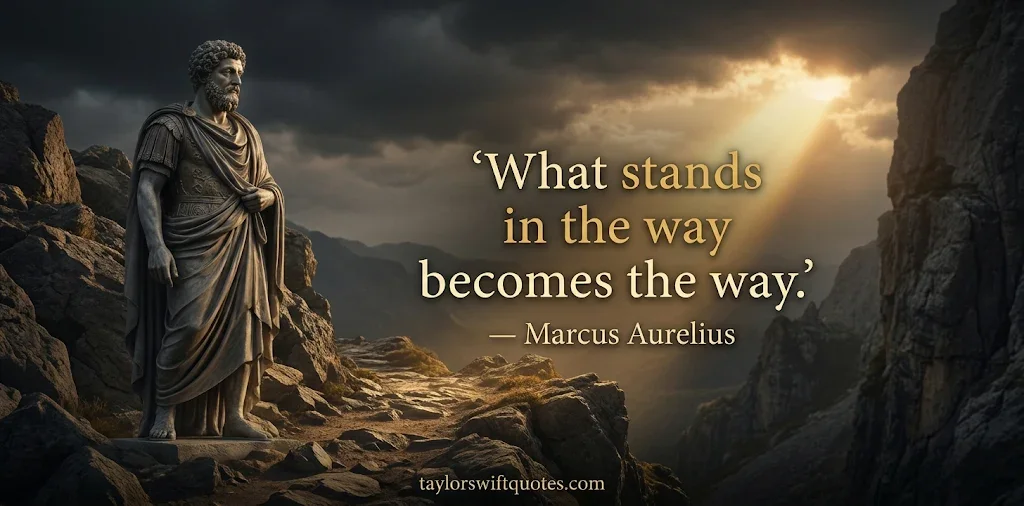
Stress hits fast. A bad email, a rough news day or a money worry can wreck your mood in seconds.
These 17 Stoic quotes from Marcus Aurelius, Seneca and Epictetus give you quick ways to handle stress and face reality with a clear head. Each one comes with a plain meaning and one action you can try today.
Table of Contents
Why Stoic Quotes Help You Handle Stress and Reality
Stress is common in the U.S., and the causes keep shifting. Stoic wisdom works because it gives you one skill: separating what you can change from what you can’t.
Recent data shows how heavy the load is:
- 62% of U.S. adults say societal division is a major source of stress. stress
- 75% say they feel more stressed about the country’s future than they used to. powershealth
- 69% say misleading information stresses them, up from 62% a year earlier. newatlas
These figures come from the American Psychological Association’s Stress in America 2025 survey.
Stoicism began with Zeno of Citium, who taught in Athens around 300 BC. Later teachers kept it practical.
- Epictetus was born into slavery. His Discourses and Enchiridion teach the dichotomy of control.
- Seneca was a Roman statesman who was exiled. He wrote 124 letters to Lucilius.
- Marcus Aurelius ruled Rome during war and plague. His private journal became Meditations.
These men dealt with real danger. So their stress management advice comes from lived pressure.
17 Stoic Quotes to Handle Stress and Reality
Read these slowly. Pick one that fits your day and use it as a mental reset.
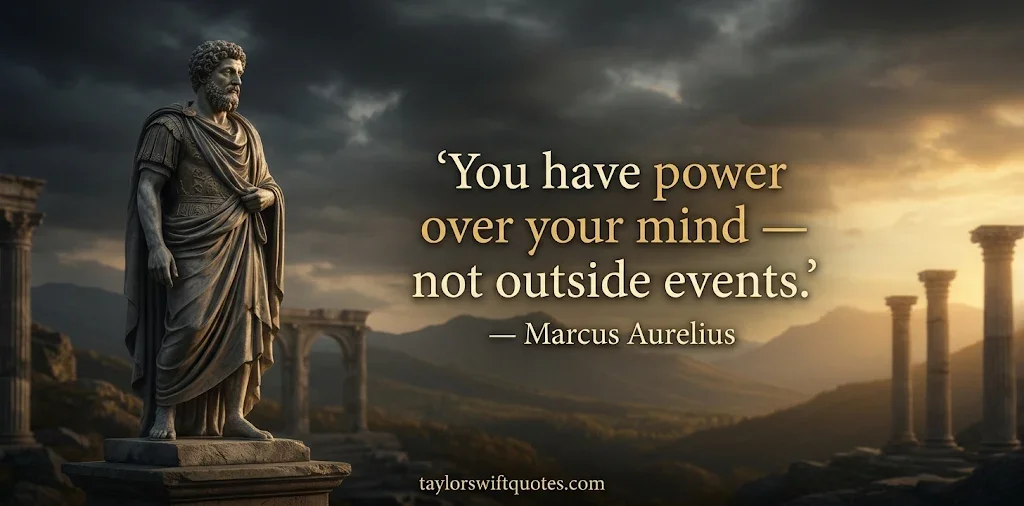
“You have power over your mind — not outside events.”
Marcus Aurelius, Meditations. Best for: feeling out of control.
What it means: Events are not yours to command. Your thoughts and responses are.
Try this: When stress spikes, name one thing you can control right now. Do that.
“Some things are in our control and others not.”
Epictetus, Enchiridion. Best for: work pressure.
What it means: This is the dichotomy of control. Your actions and opinions are yours. Other people’s moods and the economy are not.
Try this: Draw two columns, “mine” and “not mine.” Sort your worries.
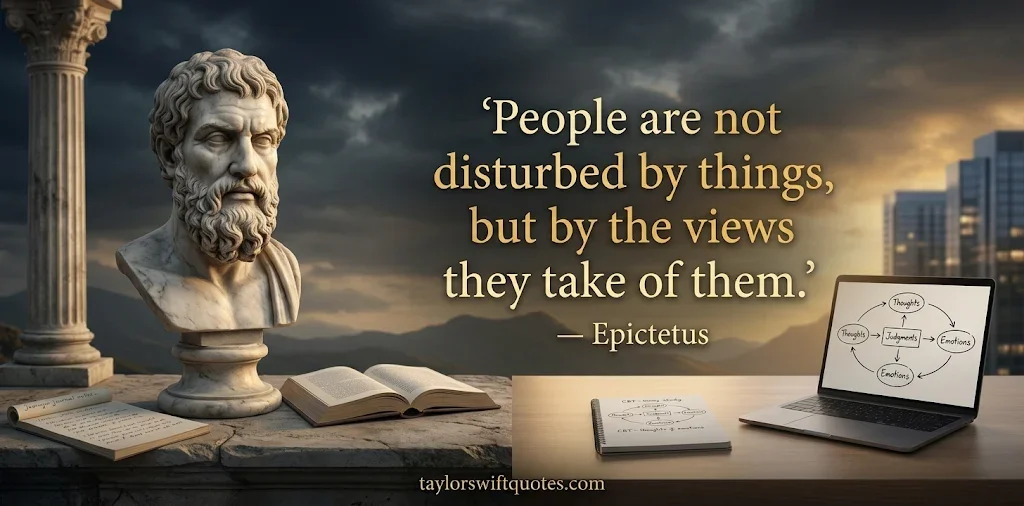
“People are not disturbed by things, but by the views they take of them.”
Epictetus. Best for: anxiety about events.
What it means: Your judgment adds stress to a plain event. A late bus is just a late bus until you call it a disaster.
Try this: Describe the problem in one flat, factual sentence. Drop the drama.
“Demand not that things happen as you wish, but wish them to happen as they do.”
Epictetus. Best for: facing hard truths.
What it means: This is acceptance of reality. Fighting facts drains energy.
Try this: Say, “This is what is happening.” Then pick your next small step.
“External things are not the problem. It’s your assessment of them.”
Marcus Aurelius. Best for: criticism and bad news.
What it means: The pain often comes from the story you tell about an event. You can rewrite that story.
Try this: Ask, “Is this fact, or is this my opinion?”
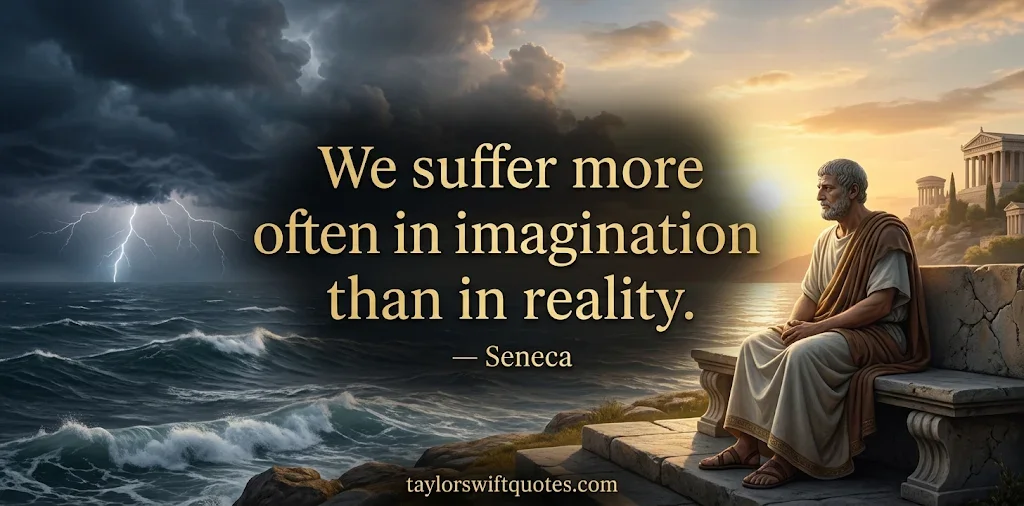
“We suffer more often in imagination than in reality.”
Seneca, Letters from a Stoic. Best for: overthinking.
What it means: Your mind plays worst-case movies that rarely come true.
Try this: Write down your top worry. Next to it, write what has actually happened so far.
“He suffers more than necessary, who suffers before it is necessary.”
Seneca. Best for: waiting on test results, job news or money.
What it means: Anticipatory anxiety pays for pain you may never owe.
Try this: Set a “worry window” of 10 minutes. When it ends, move on.
“Never let the future disturb you.”
Marcus Aurelius. Best for: fear of what’s next.
What it means: Marcus adds that you will face the future with the same reason you have today.
Try this: Ask, “What can I do about this today?” Leave the rest.
“The greatest obstacle to living is expectancy.”
Seneca. Best for: constant “what if” thinking.
What it means: Waiting on tomorrow makes you lose today.
Try this: Do one thing fully in the present. Eat a meal with no phone.
“What stands in the way becomes the way.”
Marcus Aurelius. Best for: setbacks.
What it means: An obstacle can become your training ground. It shows you what to fix or learn.
Try this: List one lesson from your current problem.
“Difficulties strengthen the mind, as labor does the body.”
Seneca. Best for: burnout and hard seasons.
What it means: Resilience grows through use, like a muscle.
Try this: Do one small hard thing today on purpose, such as a cold shower or a tough call.
“Fire tests gold, suffering tests brave men.”
Seneca. Best for: tough times.
What it means: Hard moments reveal character. They don’t create it from nothing.
Try this: Recall a past struggle you survived. Remind yourself of that proof.
“It’s not what happens to you, but how you react to it that matters.”
Epictetus. Best for: setbacks that feel unfair.
What it means: You choose your response, even when you can’t choose the event.
Try this: Wait ten seconds before replying to anything that upsets you.
Seneca also warned that unchecked anger often hurts you more than the insult that caused it.
What it means: Anger is a heavy price to pay for someone else’s words.
Try this: Breathe, then ask, “Will this matter next week?”
“Any person capable of angering you becomes your master.”
Epictetus. Best for: difficult coworkers and family.
What it means: If others can trigger you at will, they control you.
Try this: Respond with calm. Notice how it takes their power away.
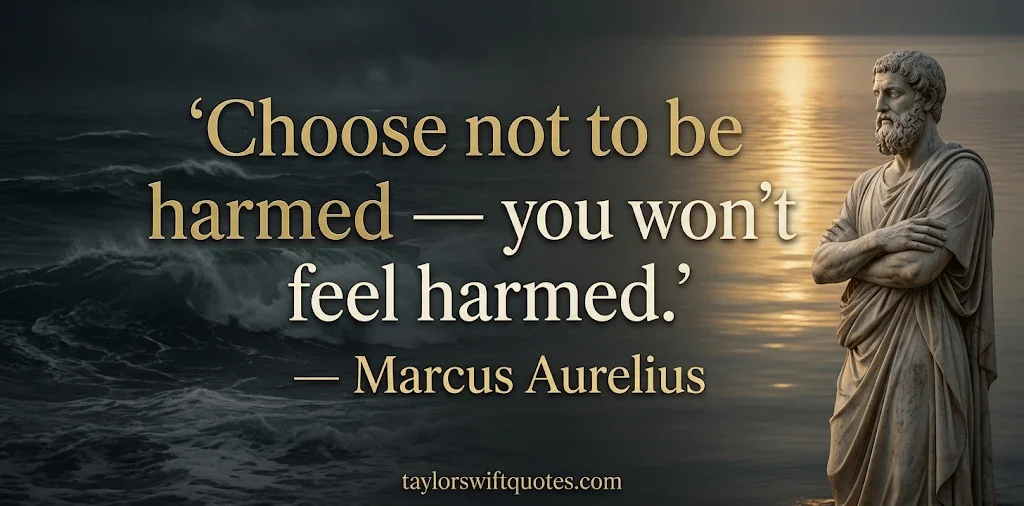
“Choose not to be harmed — and you won’t feel harmed.”
Marcus Aurelius. Best for: insults and rude people.
What it means: You cannot stop every insult. You can refuse to take it in.
Try this: Think, “That says more about them than me,” and let it go.
“You could leave life right now.”
Marcus Aurelius. Best for: perspective.
What it means: This is memento mori, the reminder that time is limited. Petty stress shrinks beside it.
Try this: Ask, “Would this matter if I had one year left?”
How to Handle Stress Like a Stoic Every Day
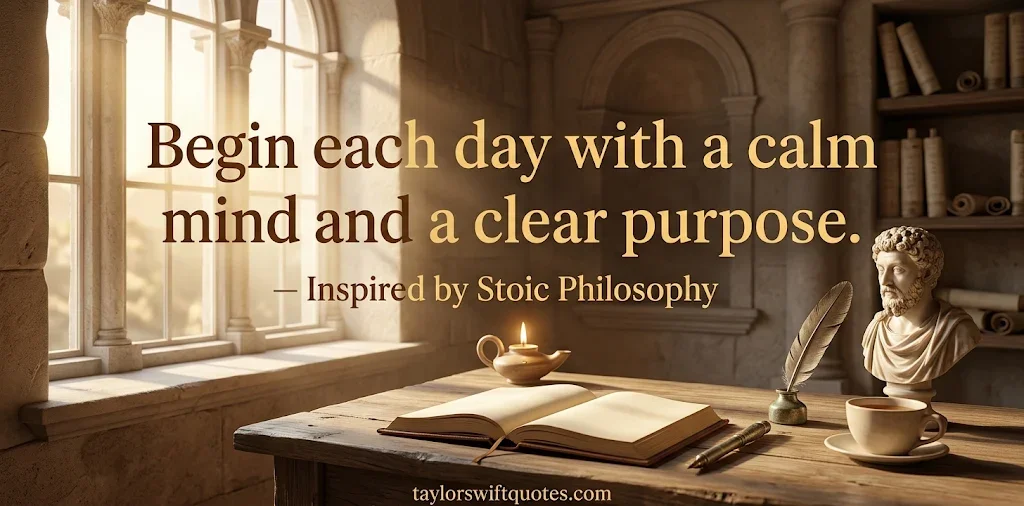
Quotes help most when you turn them into habits. Here is a simple routine built from classic Stoic exercises.
What is the 3-step Stoic reset for stress? Use it the moment you feel tense:
- Pause. Take one slow breath before you react.
- Sort. Ask, “Is this in my control?”
- Act. Do the one useful thing that is yours to do.
Add these daily habits:
- Morning preparation. Marcus began his day by expecting difficult people. Doing this lowers surprise and emotional reactivity.
- Evening review. Seneca reviewed his day each night. Ask what went well, what went wrong and what you’d change.
- Negative visualization. Picture a setback for a moment, then plan your response. This builds calm.
- Journaling. Write one line a day: “What was in my control today?”
How do you use Stoicism for work stress? Focus on your effort, not the outcome. You can prepare for the meeting. You can’t control how others react.
In a stressful moment, these five quotes work best: “You have power over your mind,” “What stands in the way becomes the way,” “We suffer more in imagination than in reality,” “Choose not to be harmed,” and “Some things are in our control and others not.”
Stoicism and Stress: What Science Says and Common Mistakes
Stoic ideas are not just old advice. They shaped modern therapy.
Does Stoicism relate to cognitive behavioral therapy (CBT)? Yes. The original cognitive therapy manual for depression by Aaron T. Beck and colleagues says the philosophical origins of cognitive therapy trace back to the Stoic philosophers. Albert Ellis, who created Rational Emotive Behavior Therapy, taught clients the famous Epictetus line about judgments. A 2019 scientific review notes that both men openly credited Stoicism as the philosophical forerunner of their treatments. Modern Stoicism +2
The shared idea is that thoughts shape emotions. Change the thought and the feeling often shifts.
Avoid these common mistakes:
- Myth: Stoics suppress emotions. They don’t. They study emotions and choose a wise response.
- Myth: Stoicism means being passive. It doesn’t. Stoics acted with courage and justice, and some opposed tyrants.
- Mistake: using quotes as slogans. Epictetus said practice matters more than study.
Note: Stoicism is a philosophy, not a medical treatment. If stress, anxiety or low mood feels heavy or lasts a long time, talk with a licensed professional.
FAQs
What is the most famous Stoic quote?
“What stands in the way becomes the way” by Marcus Aurelius is among the most quoted. It means obstacles can become your path forward. Other well-known lines include “We suffer more often in imagination than in reality” by Seneca and “Don’t explain your philosophy. Embody it” by Epictetus.
What are the 7 rules of Stoicism?
The ancient Stoics left no official list of seven. Modern writers usually sum it up like this: focus on what you control, live by virtue, accept what happens, stay present, keep perspective, remember that life is short, and serve others. Treat it as a handy summary, not a rulebook.
What are some famous quotes from Stoicism?
Famous lines include “You have power over your mind — not outside events” (Marcus Aurelius), “Difficulties strengthen the mind, as labor does the body” (Seneca), and “People are not disturbed by things, but by the views they take of them” (Epictetus). Find more in the quote list above.
What is the main philosophy of Stoicism?
Stoicism teaches that virtue (wisdom, courage, justice and self-control) is the path to a good life. It also teaches that you can’t control events, only your judgments and actions. Peace comes from mastering your own mind.
Conclusion
You can’t control the news, the boss or the bills. You can control your next thought and your next move. That is the core of handling stress and reality like a Stoic.

Jimmy Faisal is a passionate writer and quote enthusiast at Quotes Blooms. He enjoys exploring the power of words and sharing meaningful quotes, inspiring thoughts, and heartfelt messages that connect with people from all walks of life.