Pressure comes with every leadership role. Deadlines slip, plans change, and your team looks to you for answers.
Stoic leadership quotes give you simple rules for staying steady. This guide shares the best Stoic quotes on leadership, explains what they mean, and shows how to use them at work.
Table of Contents
What Stoic Leadership Means and Why It Works Today
Related Post: 45 Letters From a Stoic Quotes to Calm Your Mind Fast
Stoic leadership is calm, clear, and self-disciplined leadership. It rests on one idea: control your mind, not the storm.
Marcus Aurelius said, “You have power over your mind, not outside events.” That one line is the base of calm leadership.
Stoicism began in Athens around 300 BCE with Zeno of Citium. The name comes from a decorated porch, the stoa poikile, where the school met. (Stanford Encyclopedia of Philosophy) The Stoics built their ethics on four virtues: wisdom, courage, justice, and self-control.
The key tool is the dichotomy of control. Split every problem into two piles. One pile holds what you control, like your effort, words, and choices. The other holds what you don’t, like markets, rivals, and the past.
This matters more than ever. Gallup found that global manager engagement fell from 31% in 2022 to 22% in 2025. Leaders also report daily stress, anger, and loneliness more often than individual contributors do. (Gallup, State of the Global Workplace) In a separate summary of Gallup’s 2025 data, 42% of managers said they feel stress a lot of the time. (ASIS)
Many people think Stoicism means hiding your feelings. In practice, it means questioning your first reaction so fear or anger doesn’t make the decision for you.
Powerful Stoic Leadership Quotes From Marcus Aurelius, Seneca, and Epictetus
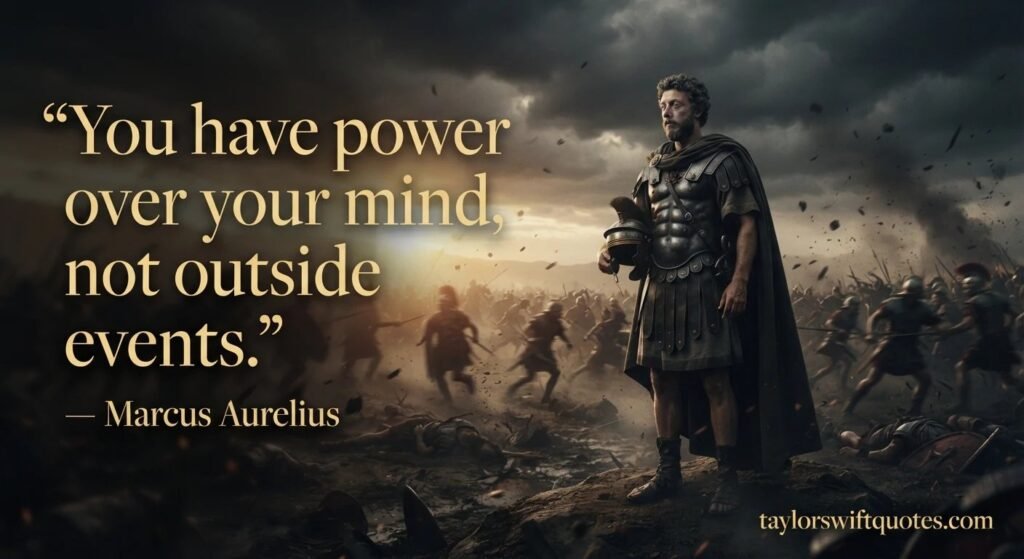
These Stoic quotes for leaders come from three thinkers who faced real pressure. One ruled an empire, one advised an emperor, and one was born a slave. Each quote below comes with a plain meaning and a workplace takeaway.
Quotes on control and mindset
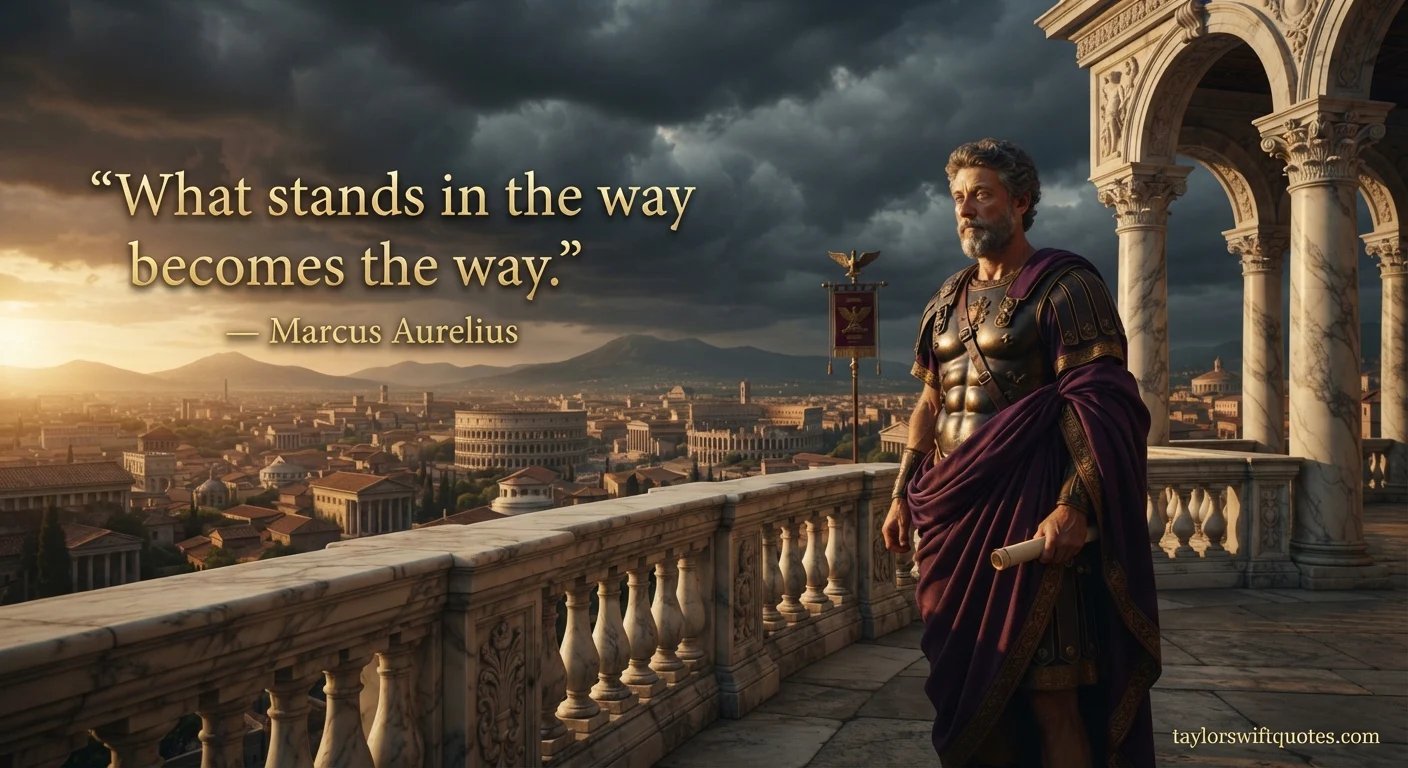
- Marcus Aurelius: “What stands in the way becomes the way.” Obstacles are training. A failed launch becomes useful data for the next one.
- Epictetus: “Men are disturbed not by things, but by the views they take of them.” Your story about an event hurts more than the event. Check the facts before you react.
- Marcus Aurelius: “The best revenge is not to be like your enemy.” Stay professional when others aren’t. Your team copies your tone.
Quotes on courage and action
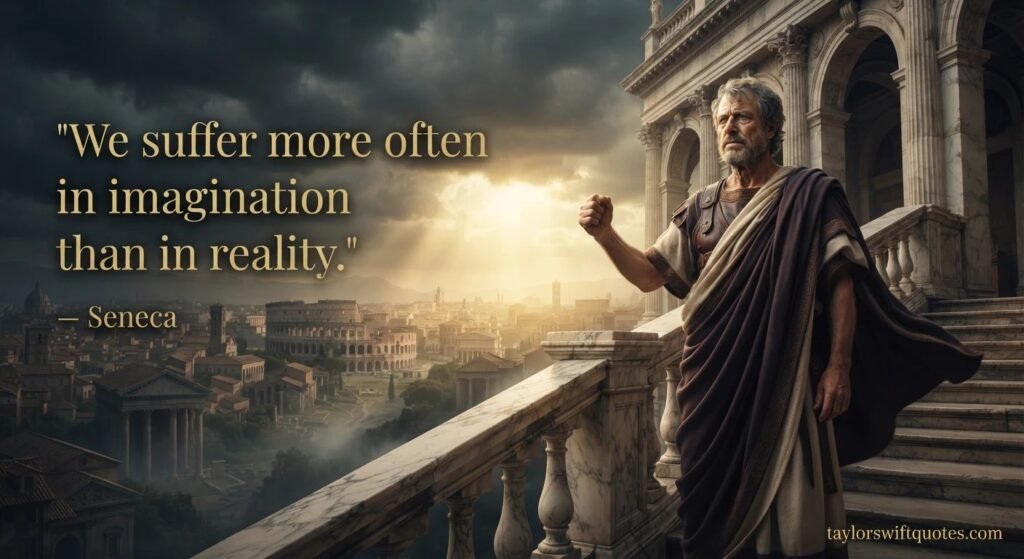
- Seneca: “We suffer more often in imagination than in reality.” Worry is usually worse than the problem. Write down the facts, then act on them.
- Seneca: “If a man knows not to which port he sails, no wind is favorable.” Without a clear goal, effort has no direction. Share the vision before the plan.
- Seneca: “Difficulties strengthen the mind, as labor does the body.” Hard seasons build strong leaders. Treat tough projects as practice.
Quotes on character and example
- Epictetus: “No man is free who is not master of himself.” Self-mastery comes before managing others. Fix your own habits first.
- Marcus Aurelius: “If it is not right, do not do it.” Let values settle hard calls. A quick profit never justifies a wrong step.
- Epictetus told his students to show their principles through actions, not speeches (Enchiridion). Your team trusts what you do, not what you say.
Marcus Aurelius is the best case study. He ruled Rome from 161 to 180 CE and wrote Meditations during that time. The book is his private diary, where he reminds himself of Stoic teachings and scolds himself when he falls short. (Stanford Encyclopedia of Philosophy) That habit of honest self-review is a strong leadership skill.
Stoic ideas have also worked under extreme stress. Admiral James Stockdale relied on the philosophy of Epictetus as a prisoner of war in Vietnam. (Stanford Encyclopedia of Philosophy) History.com also explores how Stoicism shaped five world leaders. (History.com)
How to Apply Stoic Leadership Quotes to Build Calm Power
A quote only helps if you use it. These small habits turn Stoic leadership quotes into daily practice.
- Start with one quote. Pick it each morning and name one thing within your control.
- Pause before you reply. Take one slow breath before answering bad news. That short gap often separates a calm leader from a reactive one.
- Sort the problem. Ask which parts you control, which you can influence, and which you must accept.
- Review each evening. Seneca described checking his day every night. Ask what went well, what missed, and what you’ll change.
- Lead by example. Give feedback in a steady voice. Own mistakes first.
Here is a quick example. Your biggest client cancels. Breathe, then list what you control: your response, your plan, and your tone. Act on that list and let the rest go.
Avoid three common mistakes: acting cold, ignoring your emotions, and trying to control everything. Calm power is not silence. It is steady action under pressure.
Want a simple start? Try a seven-day challenge with one quote and one action per day.
FAQs
What is a powerful Stoic quote?
“What stands in the way becomes the way” by Marcus Aurelius is one of the most powerful. It teaches that obstacles are not blocks but training. Leaders can use it to turn setbacks, missed targets, and tough feedback into the next step forward.
What is a famous quote for leadership?
“Waste no more time arguing what a good man should be. Be one” is a famous line from Marcus Aurelius. It urges leaders to act on their values instead of talking about them. Your team learns more from your actions than your words.
What are the Stoic 4 rules?
The four Stoic virtues are wisdom, courage, justice, and self-control. Wisdom guides good judgment. Courage helps you face risk. Justice means treating people fairly. Self-control keeps emotions from driving choices. Together they form a simple code for calm leadership.
What did Marcus Aurelius say about leadership?
Marcus Aurelius never wrote a leadership manual. His private journal, Meditations, shows what he valued: self-discipline, fairness, duty, and patience with difficult people. He believed a leader should first master their own mind, then guide others by example.
Conclusion
Stoic leadership quotes are not just old words. They are tools for staying calm when pressure rises.
Focus on what you control. Lead by example. Review your day with honesty. Pick one quote today and use it this week.

Jimmy Faisal is a passionate writer and quote enthusiast at Quotes Blooms. He enjoys exploring the power of words and sharing meaningful quotes, inspiring thoughts, and heartfelt messages that connect with people from all walks of life.