
Racing thoughts are common. The National Institute of Mental Health reports that about 1 in 5 U.S. adults has an anxiety disorder in a given year. Nearly two thousand years ago, a Roman named Seneca offered simple tools for the same problem.
This guide shares 45 Letters From a Stoic quotes, grouped by the trouble they solve. Each one has a plain-English meaning and a small action you can try right now. Seneca wrote these letters to his friend Lucilius near the end of his life, around AD 62 to 65. He was a statesman, writer, and adviser to Emperor Nero (Britannica). Wording changes between translations, such as Gummere and Campbell, so a quote may read a little differently in your copy. You can read a full public-domain text on Wikisource.
Table of Contents
Letters From a Stoic Quotes for Anxiety, Fear, and Overthinking
Related Post: 45 Stoic Quotes That Forged Unbreakable Minds
Most worry lives in the future. These Seneca quotes pull you back to what is real and what you can do today.
- “There are more things … likely to frighten us than to crush us.” (Letter 13) Most fears are bigger than the facts. Try this: write down only what has actually happened.
- “Cease to hope … and you will cease to fear.” (Letter 5) Hope and fear both stare at the future. Try this: name one thing you can do today, then do it.
- “Wild animals run from the dangers they actually see.” (Letter 74) Animals relax once danger passes. We replay the past and rehearse the future. Try this: ask, “Is anything wrong right now?”
- “No one confines his unhappiness to the present.” Memory and anxiety stretch pain beyond its real size. Try this: take three slow breaths and notice the room around you.
- “He suffers more than is necessary, who suffers before it is necessary.” (Letter 98) Worrying early means suffering twice. Try this: set a 10-minute worry window, then stop.
- “Hold every hour in your grasp.” (Letter 1) Treat the hour in front of you as your only task. Try this: finish one small thing before checking your phone.
- “It is because we do not dare that they are difficult.” (Letter 104) Fear makes tasks look harder than they are. Try this: do the first two minutes of the thing you are avoiding.
- Seneca says the safe harbor is to stop fretting about what the future brings and stand ready for whatever comes. Try this: make a simple backup plan, then let the worry go.
- Seneca suggests rehearsing bad news in advance (Letters 18 and 91). This habit is called premeditatio malorum, or “the premeditation of evils.” It shrinks surprise. Try this: picture a setback calmly and decide your first move.
- “The Fates lead the willing, and drag the unwilling.” (Letter 107, quoting Cleanthes) Fighting what you cannot change adds pain. Try this: say, “This is happening. What is my next step?”
- “What fortune has made yours is not your own.” (Letter 8) Money, status, and luck can vanish. Try this: list what stays with you no matter what: your choices and your character.
Seneca Quotes on Stress, Anger, and Inner Peace

Stress often sends us hunting for a new place, job, or crowd. These quotes point you to a steadier fix: your own mind.
- “Not to be in a different place but to be a different person.” (Letter 28) A vacation will not fix a restless mind. Try this: change one habit, not your location.
- “Nothing is burdensome if taken lightly.” Irritation makes small problems bigger. Try this: rate the problem from 1 to 10, then ask if it truly earns that number.
- “Withdraw into yourself, as far as you can.” (Letter 7) Quiet time restores focus. Try this: sit for five minutes with no screen.
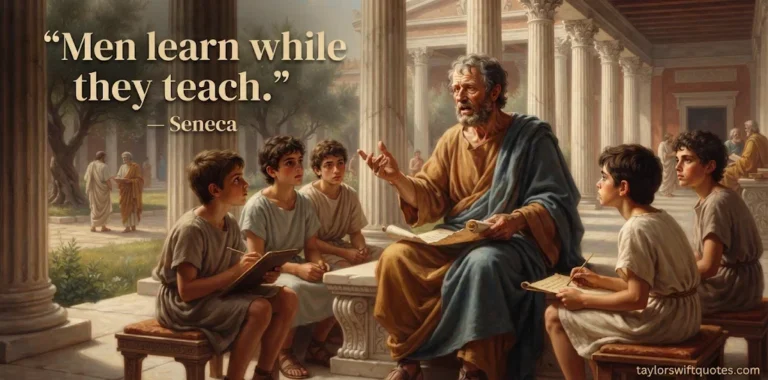
- “Men learn while they teach.” (Letter 7) Good company lifts you, and you lift others. Try this: message a friend who makes you calmer.
- “To be everywhere is to be nowhere.” (Letter 2) Scattered attention drains energy. Try this: close extra tabs and do one thing.
- “Real joy is a stern matter.” (Letter 23) Lasting calm comes from steady values, not quick thrills. Try this: choose one value, like patience, and act on it today.
- In Letter 56, Seneca describes living above a noisy public bathhouse. He argues that peace comes from a settled mind, not a silent room. Try this: when noise hits, relax your shoulders and unclench your jaw.
- In Letter 84, Seneca compares good reading to bees making honey: take what is useful and blend it into your own thoughts. Try this: pick one idea from today’s reading and apply it.
- Seneca writes that you should live so that you could tell your enemy anything you hide (Letter 43). Secrets and guilt weigh heavy. Try this: fix one thing you would not want exposed.
- “Let us say what we feel, and feel what we say.” (Letter 75) Gaps between words and values create stress. Try this: say one honest, kind sentence you have been holding back.
- Seneca teaches that a wise person is self-sufficient (Letter 9). Your calm should not hang on other people’s moods. Try this: write three things you can give yourself without help.
- “Enjoy present pleasures in such a way as not to injure future ones.” Moderation protects tomorrow’s peace. Try this: stop one habit a little earlier tonight.
Stoic Quotes on Time, Death, and Living Fully
Thinking about death sounds grim, but Stoics used it to cut through trivial worries. This idea is called memento mori, Latin for “remember you will die.”
- “Nothing, Lucilius, is ours, except time.” (Letter 1) Time is your one real possession. Try this: say no to one thing that wastes it.
- Seneca says we are “dying daily” (Letter 24). Each day that passes is gone for good. Try this: pick one thing today that you will do on purpose.
- Seneca warns that few people ever look back over their lives. Try this: spend five minutes tonight asking what went well.
- In Letter 12, Seneca praises old age as a time full of pleasure if you know how to use it. Try this: call someone older and ask for one lesson.
- In Letter 83, Seneca describes ending each day by reviewing it, a habit he took from the philosopher Sextius. Try this: ask, “What did I fix? What did I resist? What can I do better?”
- In Letter 77, Seneca compares life to a play: what counts is how well it is acted, not how long it runs. Try this: spend today on quality, not speed.
- “He who has learned how to die has unlearned how to be a slave.” (Letter 26) Facing the end loosens fear’s grip. Try this: ask what you would regret not doing, and do a small piece of it.
- In Letter 4, Seneca argues that death is not an evil to be feared. Each day lived well is a complete life. Try this: end the day by saying, “That was enough.”
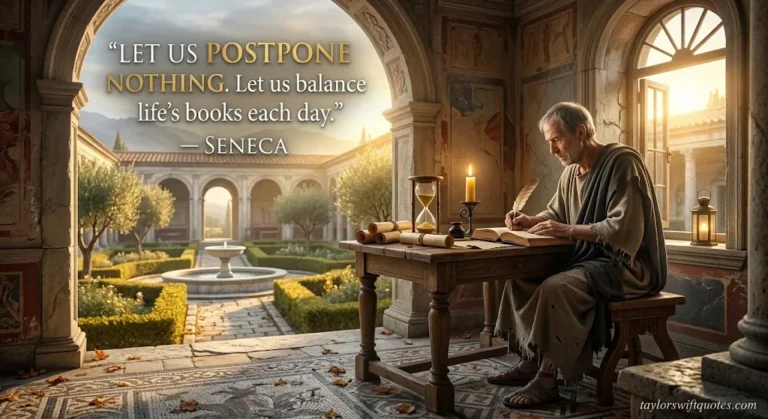
- “Let us postpone nothing.” (Letter 61) Unfinished business crowds the mind. Try this: send the message you keep delaying.
- Seneca urges you to make sure your faults die before you do. Try this: choose one flaw, such as snapping at people, and work on it this week.
- In Letter 54, Seneca says death will be what it was before you were born. Nothing in that state was painful. Try this: read this line slowly when fear spikes.
Seneca Quotes on Simple Living, Friendship, and Self-Growth

Wanting less is one of the fastest ways to feel calmer. These quotes cover money, friendship, and the habit of becoming your own ally.
- “We fail to realize how unnecessary many things are.” We buy things because we can, not because we need them. Try this: go one day without something you rely on.
- “Live in harmony with nature,” Seneca writes, and you will never be poor (Letter 16). Natural needs are few and easy to meet. Try this: list your real needs, then compare them with your wants.
- “The man who craves more … is poor.” (Letter 2) Poverty is a feeling of lack, not a bank balance. Try this: write three things you already have enough of.
- Seneca notes that wealth “does not end their troubles, it only changes them.” Try this: ask what problem a purchase would really solve.
- Philosophy asks for plain living, not self-punishment (Letter 5). Calm does not require misery. Try this: simplify one routine without turning it into a test.
- Seneca advises treating the body only as far as good health needs (Letter 8). Try this: sleep, move, and eat well before reaching for comfort habits.
- “Regard a friend as loyal, and you will make him loyal.” (Letter 3) Trust builds trust. Try this: extend trust to one person today.
- Seneca says no valuable thing is enjoyable without someone to share it with (Letter 6). Try this: share a small win with a friend.
- “I have begun to be a friend to myself.” (Letter 6) Seneca calls this his best progress. Try this: talk to yourself the way you would talk to a close friend.
- “Each day acquire something that will fortify you against poverty, against death.” (Letter 2) Pick one good thought and absorb it fully. Try this: choose one quote from this list and carry it all day.
- Seneca says true freedom means being “a slave to philosophy” (Letter 8). Daily practice frees you from impulse. Try this: spend ten minutes today reading or journaling.
FAQs
What is the best quote from Seneca’s Letters From a Stoic?
No official ranking exists. Many readers pick the line that we suffer more in imagination than in reality (Letter 13). It fits the calm your mind goal best, because it separates real problems from imagined ones.
What is the most famous Stoic quote?
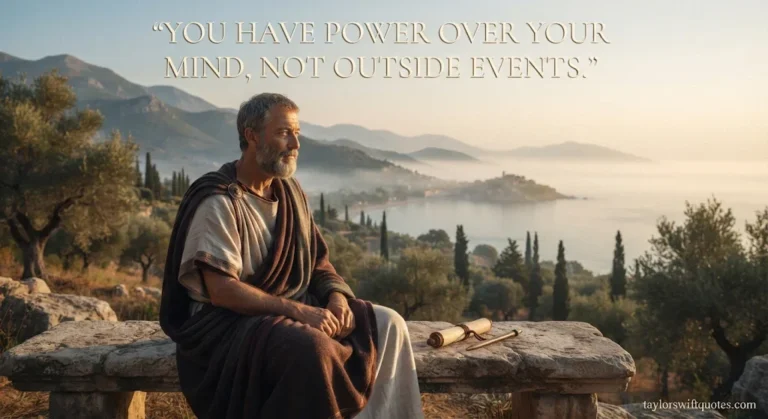
There is no single answer. Common picks are Epictetus’s idea that people are upset by their opinions of things, not the things themselves, and Seneca’s line about imagined suffering. The popular “You have power over your mind, not outside events” is often credited to Marcus Aurelius but is a modern paraphrase of his ideas (see Meditations 8.47).
What are the 7 pillars of Stoicism?
There is no official list of seven. A helpful teaching framework includes the four cardinal virtues: wisdom, courage, justice, and temperance. Add the dichotomy of control, living in agreement with nature, and acceptance of fate. See the Stanford Encyclopedia of Philosophy for the full background.
What are 9 famous quotes by Marcus Aurelius?
- Do every act as if it were your last (2.5).
- You could leave life at any moment, so act and speak well (2.11).
- Your mind takes on the color of your thoughts (5.16).
- What blocks your path can become your path (5.20).
- Look within; the source of good is inside you (7.59).
- Pain comes from your judgment of a thing, not the thing itself (8.47).
- Anxiety was never outside; it lived in your own opinions (9.13).
- Stop debating what a good person is and be one (10.16).
- Welcome whatever fate brings, because it was meant for you (7.57).
One short line from Seneca can calm your mind faster than a long pep talk. Start with quote 1 or 5 if you are anxious, 12 or 13 if you feel stressed, and 25 if you feel stuck. Read it slowly, try the small action, and come back tomorrow for another.

Jimmy Faisal is a passionate writer and quote enthusiast at Quotes Blooms. He enjoys exploring the power of words and sharing meaningful quotes, inspiring thoughts, and heartfelt messages that connect with people from all walks of life.